


Modern process plants rely on two critical automation systems that often share information but serve very different purposes. The Basic Process Control System (BPCS) keeps the process operating efficiently, while the Safety Instrumented System (SIS) is designed to protect people, equipment, and the environment when abnormal conditions occur. Although these systems may monitor the same process variables, they are expected to remain functionally independent.
That independence is easier to specify than it is to achieve.
In many facilities, pressure, temperature, level, or flow transmitters provide signals to both the BPCS and the SIS. Sharing field instrumentation is common practice and is permitted under IEC 61511 when independence requirements are satisfied. However, the electrical path between those systems is sometimes overlooked. A ground fault, power supply problem, maintenance error, or input card failure on the control system side can inadvertently affect the safety loop if proper isolation has not been incorporated.
The result is a hidden common-cause failure that may not become apparent until the safety function is needed most.
Electrical signal isolation provides a practical and economical way to preserve system independence while maintaining access to valuable device diagnostics. By preventing faults from propagating between systems, isolators help improve reliability, simplify maintenance, and support the intent of modern functional safety standards.
When Independent Systems Become Electrically Connected
From a process perspective, the BPCS and SIS may appear to operate independently. In reality, they often become electrically linked through shared field wiring.
A single pressure transmitter, for example, may provide a 4–20mA signal to the control system for process regulation while simultaneously supplying the safety logic solver with the same measurement for emergency shutdown decisions. Without proper isolation, these two systems become part of the same electrical circuit.
Under normal operation, this arrangement works without issue. Problems arise when something abnormal occurs.
Examples include:
-
A failed analog input card introduces an unexpected voltage.
-
A ground fault develops within the control cabinet.
-
Maintenance personnel inadvertently short a signal during troubleshooting.
-
A power supply develops excessive ripple or noise.
-
An incorrectly wired replacement module injects current into the loop.
Instead of remaining isolated, these electrical disturbances can propagate into the safety system, creating exactly the type of common-cause failure that safety engineers work to eliminate.
Functional safety standards emphasize independence because failures that simultaneously affect multiple protection layers significantly reduce overall risk reduction. Electrical isolation helps ensure that problems originating in one system do not compromise another.
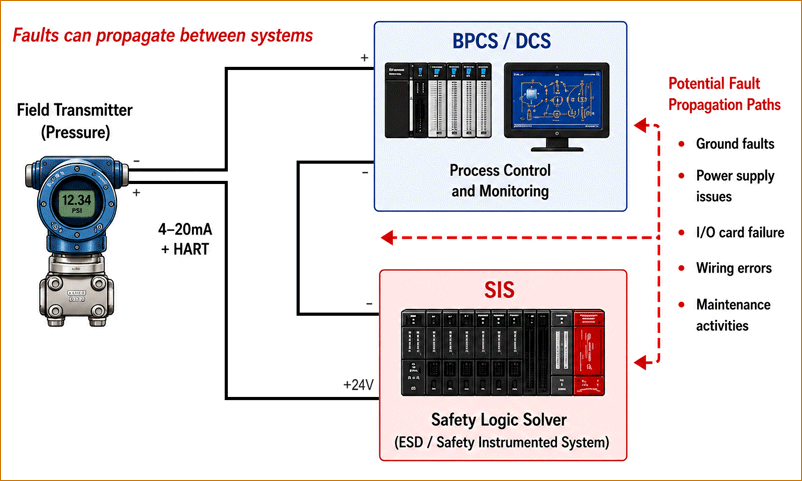
Figure 1: Shared Transmitter Architecture: BPCS and SIS without Signal Isolation
Secondary System Failures Are More Common Than You Think
When discussing safety systems, engineers often focus on failures of transmitters, final control elements, or logic solvers. Less attention is given to failures that originate in supporting equipment.
In practice, many abnormal conditions begin elsewhere.
Routine maintenance activities can temporarily disconnect wiring or introduce shorts. Aging power supplies may create unstable loop conditions. Ground potential differences between remote cabinets can distort low-level analog signals. During plant expansions, additional equipment can unintentionally alter grounding paths that previously functioned without issue.
None of these events necessarily indicate a failure of the SIS itself. Yet each has the potential to influence safety signals if the BPCS and SIS remain electrically connected.
Brownfield facilities are especially susceptible. Years of incremental modifications often result in mixed generations of control hardware, varying grounding practices, and undocumented wiring changes. Even well-maintained systems can accumulate electrical vulnerabilities over decades of operation.
Installing galvanic isolation between systems creates a clear electrical boundary. Rather than allowing disturbances to propagate through shared loop wiring, the isolator transfers the process signal while blocking unwanted electrical interaction.
This separation preserves signal integrity without requiring duplicate field instruments in many applications.
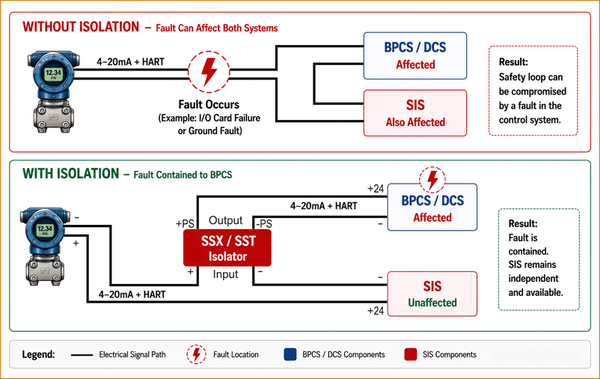
Figure 2: Common-Cause Failure Path vs. Isolated Signal Path
Diagnostics Are Only Valuable If They Remain Independent
Today’s smart transmitters generate far more information than a simple process variable. HART-enabled devices continuously report sensor health, electronics status, configuration information, calibration data, and diagnostic alerts that can identify developing problems long before they become process upsets.
These diagnostics support predictive maintenance, improve asset management, and reduce unnecessary field inspections.
However, diagnostic information is only useful if the measurement path itself remains trustworthy.
If electrical disturbances from the BPCS interfere with the safety signal, engineers may find themselves questioning whether an abnormal reading reflects an actual process condition or an electrical problem elsewhere in the system. Valuable diagnostic information becomes harder to interpret when multiple systems influence one another.
Modern signal isolators address both requirements simultaneously. They maintain electrical separation while allowing HART communication to pass transparently through the loop. Engineers retain access to device diagnostics without sacrificing the electrical independence expected between the BPCS and SIS.
The result is improved visibility into field device health while maintaining confidence that safety measurements remain unaffected by unrelated control system issues.
Signal Isolation in Practice
Consider a refinery pressure transmitter monitoring the discharge pressure of a critical compressor.
The transmitter supplies the BPCS, which continuously adjusts compressor operation to maintain production targets. The same measurement is also used by the SIS to
initiate a shutdown if pressure exceeds a predetermined limit.
During routine maintenance, technicians replace an analog input module within the BPCS cabinet, thereby creating an open-loop circuit.
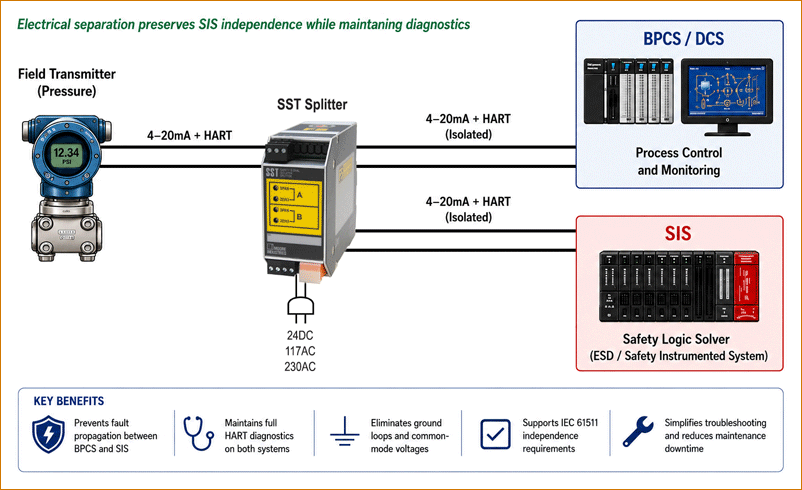
Figure 3: Isolated Architecture using Moore Industries Functional Safety Series Splitter
Without isolation, that fault may also reach the SIS input, potentially affecting the measurement used to make shutdown decisions.
With a galvanically isolated signal splitter, the disturbance remains confined to the control system side. The SIS continues receiving an accurate process signal while operators troubleshoot the control system independently.
The process remains protected because the safety layer maintains its intended independence.
This type of protection is particularly valuable during commissioning, plant turnarounds, cabinet upgrades, and expansion projects when wiring changes and maintenance activities occur most frequently.
Supporting Functional Safety Objectives
IEC 61511 does not prescribe a single method for achieving independence between the BPCS and SIS. Instead, it establishes performance objectives that reduce the likelihood of common-cause failures affecting multiple protection layers.
Electrical isolation represents one practical means of supporting those objectives.
By interrupting unwanted electrical paths, isolators help:
-
Prevent fault propagation between systems.
-
Reduce susceptibility to ground loops and common-mode voltages.
-
Protect analog input cards from external disturbances.
-
Maintain measurement accuracy.
-
Preserve access to smart device diagnostics.
-
Simplify maintenance and troubleshooting.
-
Support lifecycle management of aging facilities.
These benefits extend beyond safety. Improved signal quality can reduce nuisance alarms, minimize unnecessary shutdowns, and improve confidence in process measurements throughout the plant.