


Background
Remote I/O (Remote Input/Output) is one of the most practical and cost-effective tools
available for extending, modernizing, and maintaining industrial control systems. By digitizing field signals at or near the source and transmitting them back to the control system over a single communications link, Remote I/O eliminates the need for long, expensive runs of dedicated field wiring and dozens of analog input cards for the Basic Process Control Systems (BPCS). The result is faster installation, lower costs, easier maintenance, and a system that can grow with the facility.
What Is Remote I/O?
In any process control environment (such as a refinery, water treatment plant, chemical
facility or power station), field devices like temperature sensors, pressure transmitters, flow meters and valve position switches generate signals that the control system needs to read. In a traditional architecture, each of those signals is carried back to a central control room or marshalling cabinet over its own dedicated wire or cable.
Remote I/O changes this model. Instead of running individual wires from every field device back to the control room, Remote I/O hardware is placed in the field, at or near the process, where it collects and digitizes those signals. The digitized data is then transmitted back to the control system over a single communications cable, fiber-optic link, Ethernet connection, or wireless network. One cable replaces many.
The types of signals Remote I/O systems handle include:
-
Analog inputs and outputs, varying voltage and current signals, where the 4-20mA current loop signal is used by the vast majority of industrial instruments today
-
Discrete (digital) inputs and outputs, on/off signals from switches, relays, and solenoids
-
Temperature inputs, thermocouple (TC) and resistance temperature detector (RTD) signals
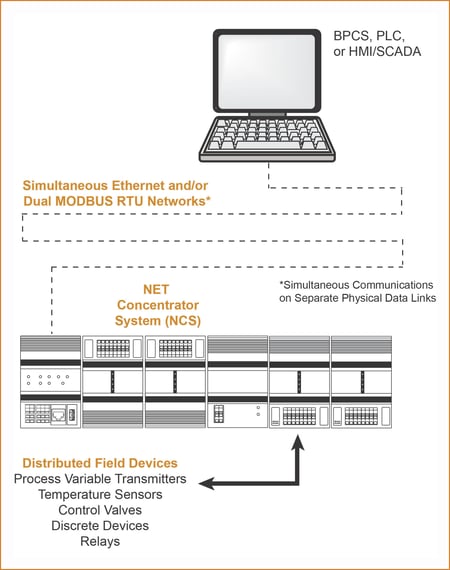
Figure 1: The NCS Remote I/O system links remote field signals that are close to the process with BPCS, PLC, and HMI/SCADA systems.
Why Use Remote I/O?
The Problem with Traditional Field Wiring
In large industrial facilities, particularly those where process equipment is spread across wide geographic areas, the sheer volume of field wiring required to connect every instrument back to a central location is staggering. Each individual cable run requires material, labor, conduit, cable trays, junction boxes, terminations, and ongoing maintenance. When a plant was originally built, those costs were accepted as a necessary part of the installation. Today, when plants need to expand, upgrade, or troubleshoot their instrumentation, the cost and complexity of traditional wiring can make even modest projects prohibitively expensive.
How Remote I/O Solves the Problem
Remote I/O solves the wiring problem by consolidating field signals locally and transmitting them digitally. The benefits are substantial:
- Dramatic reduction in field wiring costs, one communications cable replaces many individual runs
- Faster installation, consolidating terminations in the field reduces installation time significantly
- Easier long-term maintenance, a single communications cable is far simpler to inspect and maintain than a large bundle of individual wires
- Scalability, adding new I/O points to an existing Remote I/O network is straightforward and does not affect the wiring back to the host
- Reduced burden on the control system, Remote I/O handles digitizing, diagnostics, and signal conditioning, freeing up the BPCS or PLC for higher-priority functions and freeing up analog input card slots for other uses
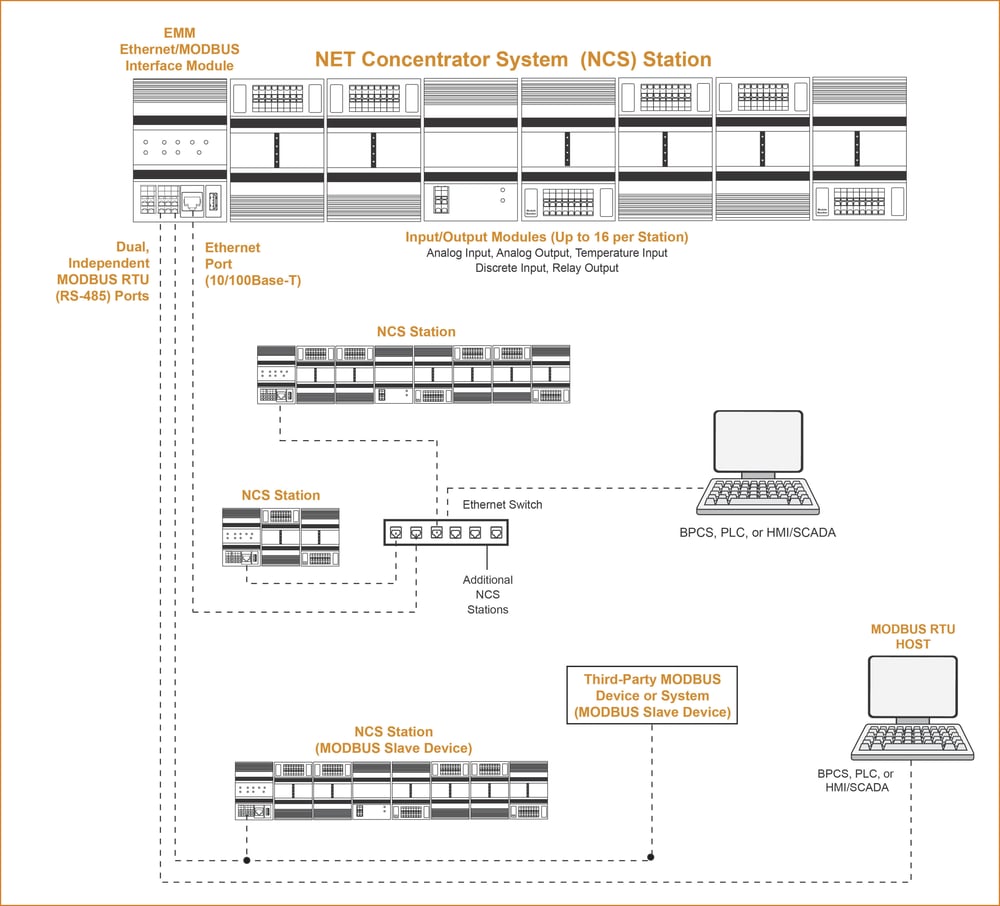 Figure 2: Multiple NCS Remote I/O Systems can handle just a few or hundreds of signal inputs and outputs over digital infrastructures.
When to Use Remote I/O
Remote I/O is not a one-size-fits-all solution, but it is the right choice in a surprisingly wide range of common scenarios. The following are the most frequently encountered situations where Remote I/O delivers clear and measurable value.
Adding New I/O Without Spare Field Wiring
One of the most common challenges in existing plants is the need to add new measurements or control points when the available field wiring is already fully utilized. In this scenario, a single twisted pair freed from an existing unused transmitter can be repurposed as a digital communications cable, carrying a dozen or more new I/O points back to the control system. Remote I/O turns a wiring dead-end into an expansion opportunity.
Expanding an Aging DCS or PLC
When an aging distributed control system (DCS) or programmable logic controller (PLC) has used all its available analog or temperature input card slots, the traditional solution is costly: purchase and install new hardware in the control room, update racks and backplanes, and modify system configuration. Remote I/O offers an alternative; new I/O points can be added through a digital communications port on the existing system, with no new hardware required in the control room.
Hazardous and Remote Locations
Gathering signals from classified hazardous areas is one of the most compelling use cases for Remote I/O. Running large quantities of wiring from a hazardous area to a safe-area marshalling cabinet is both expensive and complex, requiring intrinsically safe barriers, proper conduit sealing, and extensive documentation. Remote I/O hardware designed and certified for hazardous locations can be placed directly in or adjacent to those areas, dramatically reducing the amount of wiring that needs to cross the safety boundary. For truly remote locations where running any physical cable is impractical or cost-prohibitive, wireless physical layer options, including spread spectrum radio, cellular modems, and satellite communications, allow Remote I/O to reach virtually anywhere.
Offloading an Overburdened BPCS
Modern process plants often require high-density data acquisition, collecting large numbers of temperature measurements or process variables for trending, alarming, or historical analysis. When these data acquisition tasks are handled entirely by the BPCS, they can compete for processing resources with higher-priority control functions. Remote I/O can offload this work by collecting and transmitting process data directly to a plant historian or SCADA system, bypassing the BPCS entirely.
When the Cost of New Field Wiring Cannot Be Justified
In many plant expansion or upgrade projects, the cost of running new field wiring, particularly across long distances, through congested cable trays, or into difficult-to-access areas, is too high relative to the value of the measurement. Remote I/O changes the economics of these decisions, making it practical to add instrumentation points that would otherwise be cost-prohibitive.
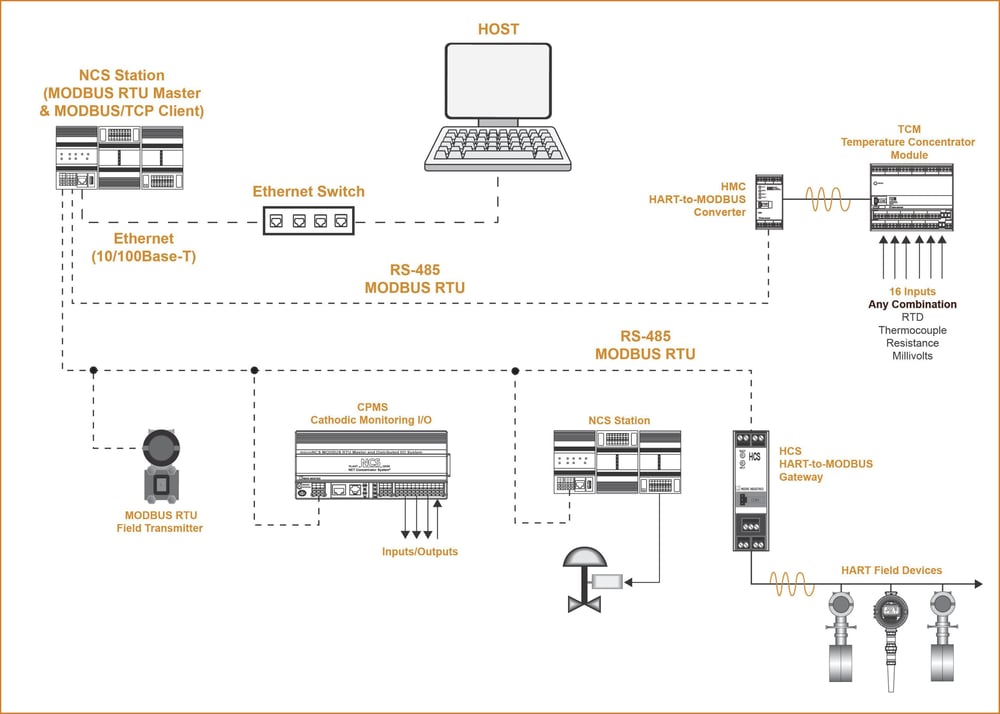
Figure 3: Remote I/O can be a very effective option when several points need to be added to an existing overburdened HOST, or when there are no extra signal cables available.
Thermocouple Extension Wire Replacement
One of the most practical and high-value applications for Remote I/O is the replacement of long runs of thermocouple (TC) extension wire. This application deserves particular attention because it addresses not only a wiring cost problem, but a chronic accuracy and maintenance problem that affects many process plants.
The Problem with Long Thermocouple Extension Wire Runs
Thermocouples generate a small millivolt-level voltage that varies with temperature. To preserve measurement accuracy, this signal must be carried back to the control system or temperature input card over specialized thermocouple extension wire, wire manufactured from the same alloy combination as the thermocouple itself. This wire is significantly more expensive than standard copper instrumentation cable and corrodes over time, which can introduce measurement errors that are notoriously difficult to diagnose and track down.
The traditional response to this problem is to replace the extension wire in kind, an expensive, time-consuming process that simply resets the corrosion clock. The same degradation process will repeat again.
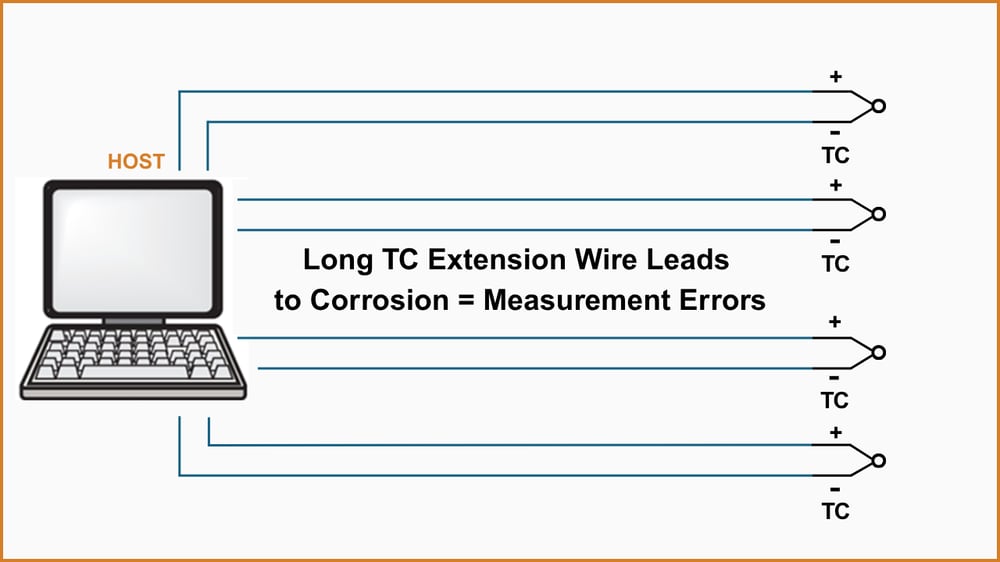 Figure 4: Long Thermocouple Extension Wire Runs Lead to Corrosion, Measurement Errors, and Frequent Wire Replacements.
How Remote I/O Solves the Extension Wire Problem Permanently
Remote I/O provides a permanent solution. By placing a Remote I/O unit near the thermocouples, each temperature signal is digitized at the source. From that point, the data travels back to the control system or historian over standard copper wire or fiber using protocols such as MODBUS RTU, MODBUS/TCP, or HART. Digital communication over properly installed copper or fiber is far less susceptible to the signal degradation problems associated with long thermocouple extension wire runs.
Many Remote I/O systems suitable for this application are rated for ambient temperatures up to 85°C and carry Class I Division 2 / Zone 2 and intrinsically safe approvals for hazardous area use, making them appropriate for deployment in demanding field environments.
Short runs of thermocouple extension wire will still connect each sensor to the Remote I/O unit, and those short runs will eventually need to be replaced. But replacing a short run is far less costly and time-consuming than replacing a long one. Short runs are also much easier to troubleshoot when a measurement problem does arise.
The Opportunity to Upgrade to RTDs
When the thermocouple extension wire is being replaced with Remote I/O, there is a natural opportunity to evaluate whether the existing thermocouples should be replaced with four-wire resistance temperature detectors (RTDs). RTDs offer significantly better accuracy than thermocouples, both at initial installation and over the operational life of the system. Where the temperature range of the process permits, upgrading from thermocouples to four-wire RTDs is a practical improvement worth considering.
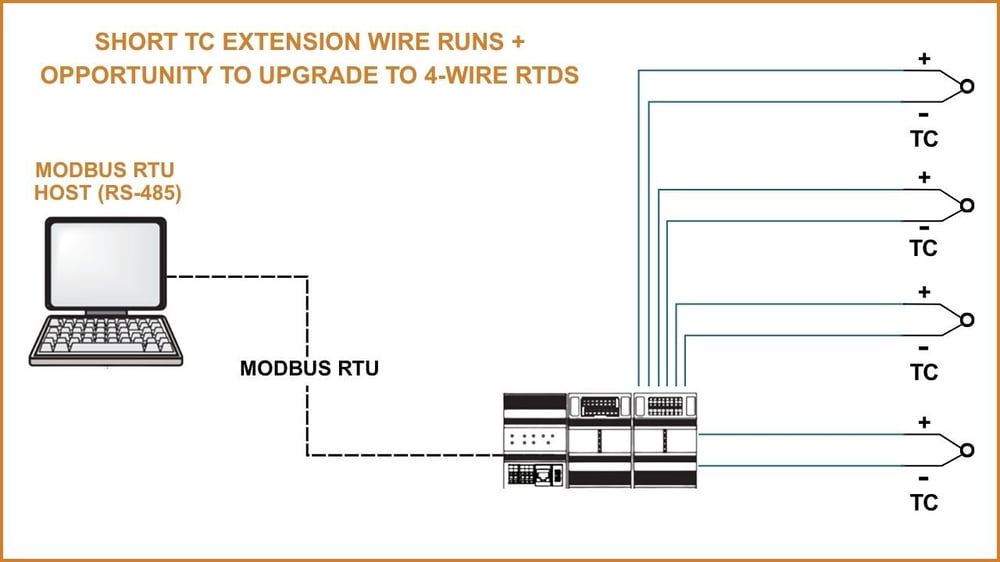 Figure 5. Remote I/O digitizes thermocouple signals at the source, with short TC extension wire runs remaining between each sensor and the Remote I/O unit. This eliminates corrosion-driven measurement errors from long wire runs.
Additional Benefits Beyond Wire Replacement
Replacing long thermocouple extension wire runs with Remote I/O delivers several benefits beyond the elimination of corrosion-driven measurement errors:
-
Noise Immunity - thermocouple extension wire, carrying millivolt-level signals over long distances, acts as an antenna for ambient electrical noise.
-
Reduced BPCS Processing Load - Remote I/O handles digitizing, linearization, and diagnostics; the host simply reads a 32-bit floating-point value per channel
-
Channel-to-Channel Isolation - eliminates ground loops that can introduce additional measurement errors
-
Freed-Up Analog Input Cards - existing temperature input cards on the BPCS or PLC can be repurposed or the capacity used for other signals
-
Easy Expandability - future measurement points added to the Remote I/O network have no impact on the wiring back to the host
Communication Standards and Physical Layers
A key strength of Remote I/O is the flexibility it offers in how data is transmitted back to the control system. Different plants have different communication infrastructures, legacy systems with varying protocol support, and requirements that range from simple serial connections to fully redundant Ethernet networks. Remote I/O can accommodate all of these scenarios.
Communication Protocols
-
MODBUS RTU - The most widely used protocol in industrial Remote I/O applications. A serial communication standard supported by virtually every major control system platform. Reliable, well-understood, and straightforward to configure.
-
MODBUS/TCP - For plants with an Ethernet infrastructure, MODBUS/TCP delivers the same simplicity and compatibility as MODBUS RTU over a standard network connection.
-
HART-IP – For users who want HART process variable, maintenance, and diagnostic data from field devices over their Ethernet, Wi-Fi, or fiber infrastructures.
-
OPC UA- A secure, open-standard, platform-independent communication protocol purpose-built for industrial automation and IoT, enabling seamless data exchange between hardware, software, and cloud systems.
-
HART to Ethernet Gateways - For facilities using HART-enabled transmitters, HART to Ethernet gateways can poll multiple HART devices and deliver process variables and diagnostic data directly over an Ethernet backbone, without requiring new wiring to the control room.
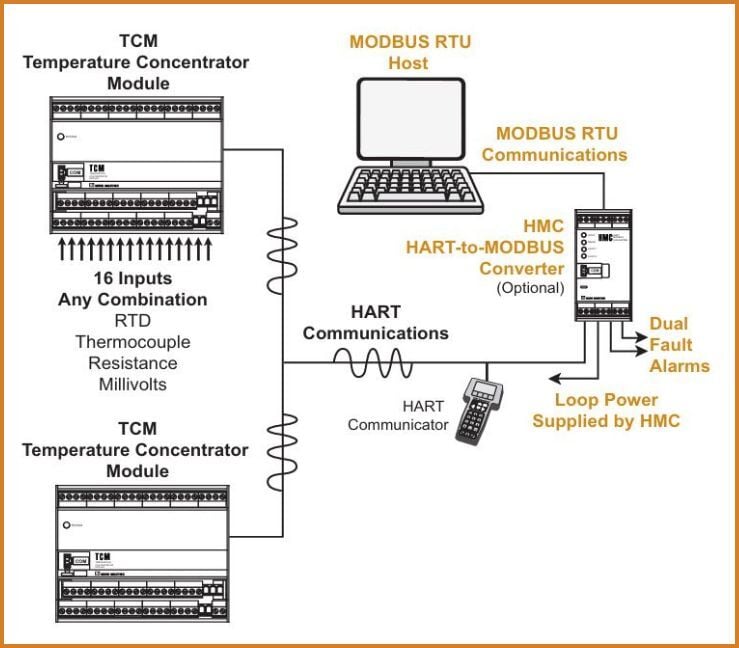 Figure 6. Moore Industries TCS in MODBUS RTU Communications Mode.
Physical Layer Options
The choice of communication protocol is independent of the physical medium used to carry the signal. Remote I/O can operate over any of the following physical layers:
-
Twisted Pair Copper Wire - the most common and lowest-cost option for installations within a single facility
-
Ethernet - standard network infrastructure for facilities with existing Ethernet backbones
-
Fiber Optic Cable - for long distances, electrically noisy environments, or applications requiring electrical isolation between ends
-
Spread Spectrum Radio - for remote locations where running cable is impractical
-
Cellular Modems - for remote facilities with cellular coverage, providing a practical alternative to running cable over long distances
-
Microwave and Satellite Links - for the most remote installations where no other communications infrastructure exists
Peer-to-Peer and Protocol-Free Operation
Not all facilities have engineering staff with expertise in MODBUS, HART-IP, OPC UA, or other digital communications protocols. Not all control systems have a convenient digital communications port available. For these situations, Remote I/O can operate in a peer-to-peer mode that requires no protocol knowledge whatsoever.
How Peer-to-Peer Mode Works
In peer-to-peer operation, analog and discrete signals are digitized at the field end of the communications link for transmission over the cable or network. At the receiving end in the control room, marshalling cabinet, or at a second Remote I/O unit, those signals are converted back to their original analog and discrete forms. The control system receives standard 4-20mA current loop signals or discrete on/off signals, with no awareness that the signals were ever digitized and transmitted remotely.
These peer-to-peer networks can also support bidirectional communication, allowing signals to travel not only from the field to the control system, but from the control system back to the field, for example, transmitting analog output signals or discrete control commands to field equipment over the same communications link.
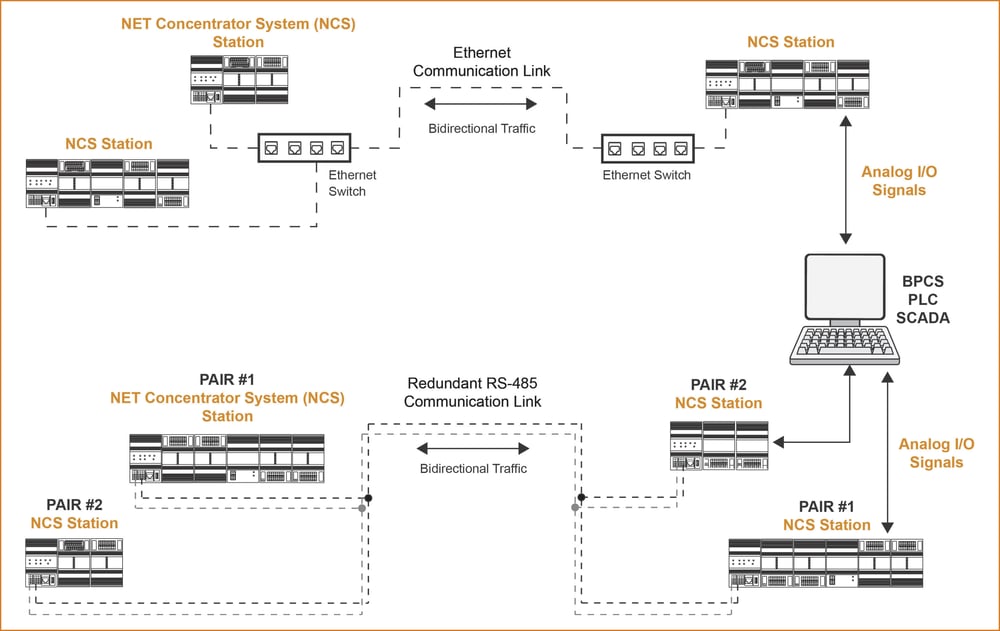 Figure 7. Remote I/O Systems can be utilized in a Peer-to-Host mode or in a Peer-to-Peer mode, where bi-directional I/O traffic is supported.
Why Peer-to-Peer Mode Is Valuable
Peer-to-peer mode delivers all of the wiring cost benefits of Remote I/O, eliminating long cable runs, reducing installation time, simplifying maintenance, without requiring any changes to the existing control system configuration or any knowledge of digital communication protocols. This makes it an ideal solution for facilities that want to modernize their instrumentation infrastructure gradually, without committing to a large-scale control system upgrade.
Peer-to-peer mode is often the fastest path to Remote I/O adoption in legacy facilities, no protocol engineering, no control system changes, and the full wiring cost benefit from day one.
Hazardous Area and Difficult Installations
Process industries routinely work with flammable liquids, gases, and combustible dust that create the potential for explosive atmospheres. Regulatory bodies in North America and internationally classify these environments and require that electrical equipment installed within them be specifically designed, tested, and certified to prevent ignition.
Hazardous Area Classifications
North American hazardous area classifications use a Class/Division system. Class I covers locations where flammable gases or vapors may be present; Class II covers combustible dust; Class III covers ignitable fibers. Division 1 locations are those where hazardous concentrations are present continuously or under normal operating conditions; Division 2 locations are those where hazardous concentrations are present only under abnormal conditions, such as equipment failure.
The international IEC system uses a Zone classification: Zone 0 is where explosive atmospheres are present continuously or for long periods; Zone 1 is where they are likely under normal operation; Zone 2 is where they are unlikely but possible under abnormal conditions. Class I Division 1 corresponds roughly to IEC Zone 0 and Zone 1; Class I Division 2 corresponds to IEC Zone 2.
Remote I/O in Hazardous Areas
Remote I/O products designed for hazardous locations are available with intrinsically safe and non-incendive approvals covering Class I Division 1 and Division 2 (IEC Zone 0/1 and Zone 2). By placing approved Remote I/O hardware directly in or adjacent to the hazardous area, the amount of wiring that needs to cross the safety boundary is dramatically reduced. Fewer wire crossings mean lower installation cost, simpler documentation, and reduced long-term maintenance complexity.
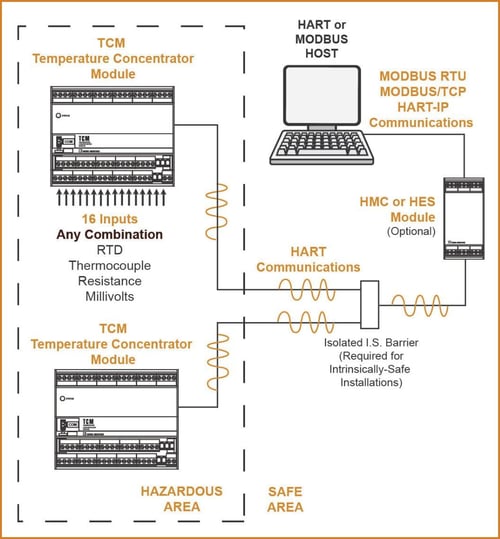 Figure 8. When I/O points need to be gathered from hazardous area locations far from the control room, Remote I/O provides a cost-effective and time-saving alternative to direct wiring and
marshalling cabinets.
Wireless for the Most Remote Locations
For installations where running any physical cable is impractical, isolated field locations, offshore oil platforms, mountain top monitoring sites, or geographically dispersed pipeline systems, wireless physical layer options allow Remote I/O to reach virtually any location. Spread-spectrum radio, cellular, and satellite communication systems are all compatible with Remote I/O, making it a viable solution regardless of the distance or terrain involved.
Industries and Applications
Remote I/O is used across a wide range of industries wherever the challenge of moving signals over distance, across hazardous boundaries, or into aging control systems needs to be solved efficiently.
| Industry | Typical Remote I/O Applications |
| Oil and Gas | Wellhead instrumentation, pipeline monitoring, remote gathering facilities, and offshore platforms |
| Water and Wastewater | Remote pumping stations, outlying treatment facilities, and lift stations connected to central SCADA systems |
| Chemical/Petrochemical | Hazardous area signal integration, temperature monitoring arrays, process expansion |
| Power Generation | Boiler tube temperatures, turbine/generator temperatures, burner tip temperatures, & plant-wide data acquisition. |
| Data Centers/Building Automation | Multi-building signal consolidation, diverse sensor type integration, and unified monitoring platforms |
The common thread across all these industries is simple: wherever signals need to travel farther, cross classification boundaries, or integrate with modern systems, Remote I/O provides a reliable and scalable solution.
Key Takeaways
Remote I/O is one of the most versatile and cost-effective tools available for extending and modernizing industrial control systems. It solves a fundamental problem, the high cost, complexity, and fragility of long field wiring runs, in a way that is practical, scalable, and compatible with virtually any existing control infrastructure.
The table below summarizes the core capabilities and benefits:
| Industry | Typical Remote I/O Applications |
| Digitizes Signals at the Source | Eliminates costly dedicated field wiring runs |
| Single Communications Link | One cable carries dozens to hundreds of I/O points |
| Expands Aging Control Systems | Adds I/O through a digital port, no new hardware in the control room |
| Protocol Flexibility | Supports MODBUS RTU/TCP, HART-IP, OPC UA, HART, and more |
| Peer-to-Peer Mode | No protocol knowledge required; control system sees standard 4–20mA |
| Hazardous Area Approvals | Class I Div. 1 & 2 / IEC Zone 0, 1 & 2 certified hardware available |
| Wireless Physical Layers | Cellular, radio, and satellite links for remote and inaccessible locations |
| Thermocouple Wire Replacement | Greatly reduces corrosion-driven measurement errors associated with long thermocouple extension wire runs |
Whether you are adding new measurement points to an existing system, offloading an overburdened DCS, connecting instrumentation in a hazardous area, replacing corroded thermocouple extension wire, or linking a remote facility over fiber or wireless, Remote I/O delivers a reliable, scalable, and cost-effective path forward.